
Places · History · Living tradition
DiscoverDwarka
Where sacred memory
meets the western sea.
A place to look closer.
A coast to move through slowly.
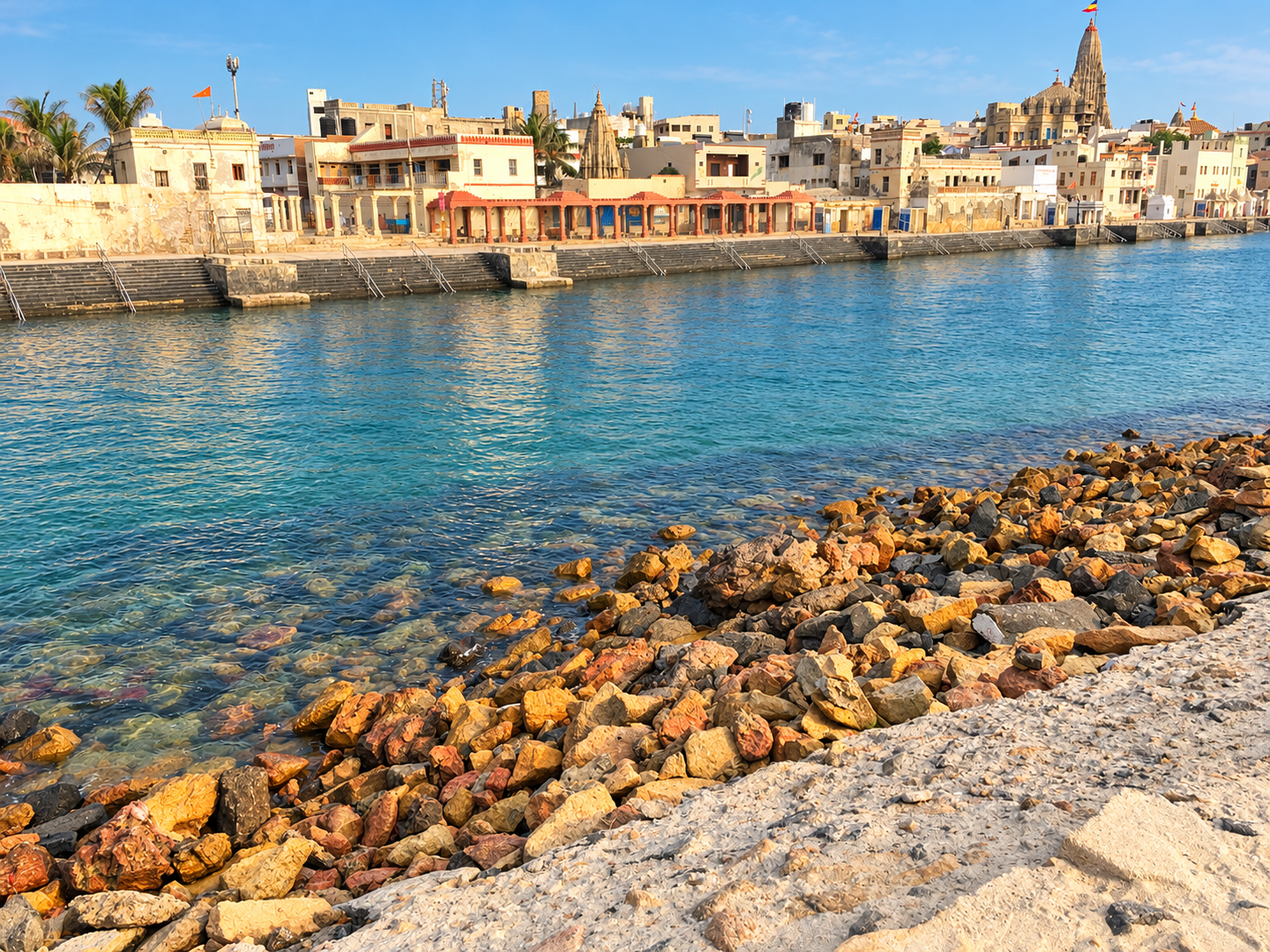
Why journey through Dwarka
A city of worship.
A landscape of stories.
A city of worship. An island of stories. A coastline that keeps asking us to look closer. Explore Dwarka through the places we can see, the traditions we inherit and the evidence we can read.
The place today
Real temples, waterfronts and coastlines, seen through carefully credited photographs.
Living tradition
The devotional associations that give these places meaning, identified as tradition.
History & imagination
Material evidence read with care. Artistic visions clearly named as interpretations.
Places of devotion
Stone, stillness & sacred life
Three shrines, each with its own presence in the pilgrimage landscape.
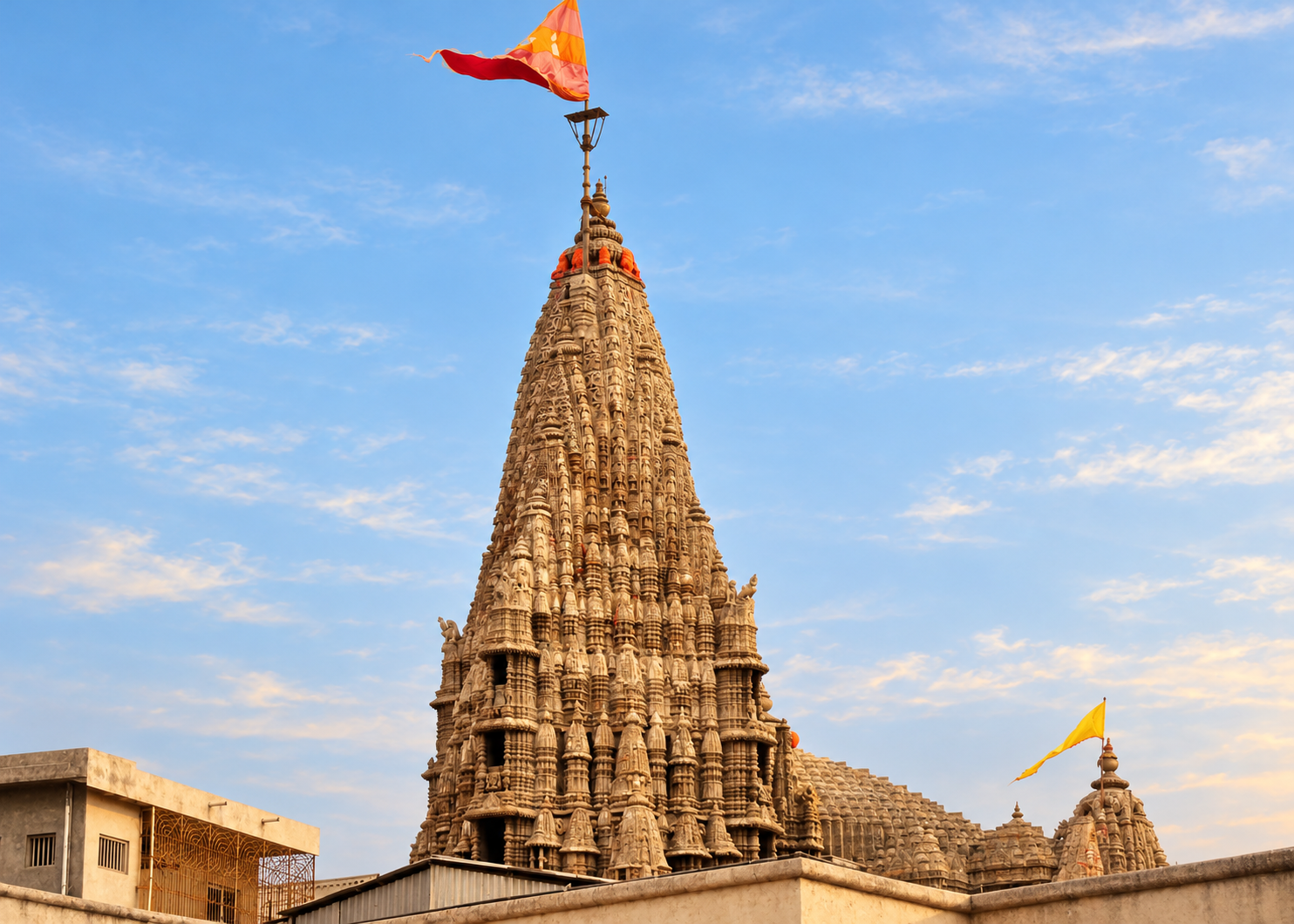
Central Dwarka
Dwarkadhish Temple
The living heart of a city devoted to Krishna.
Explore this place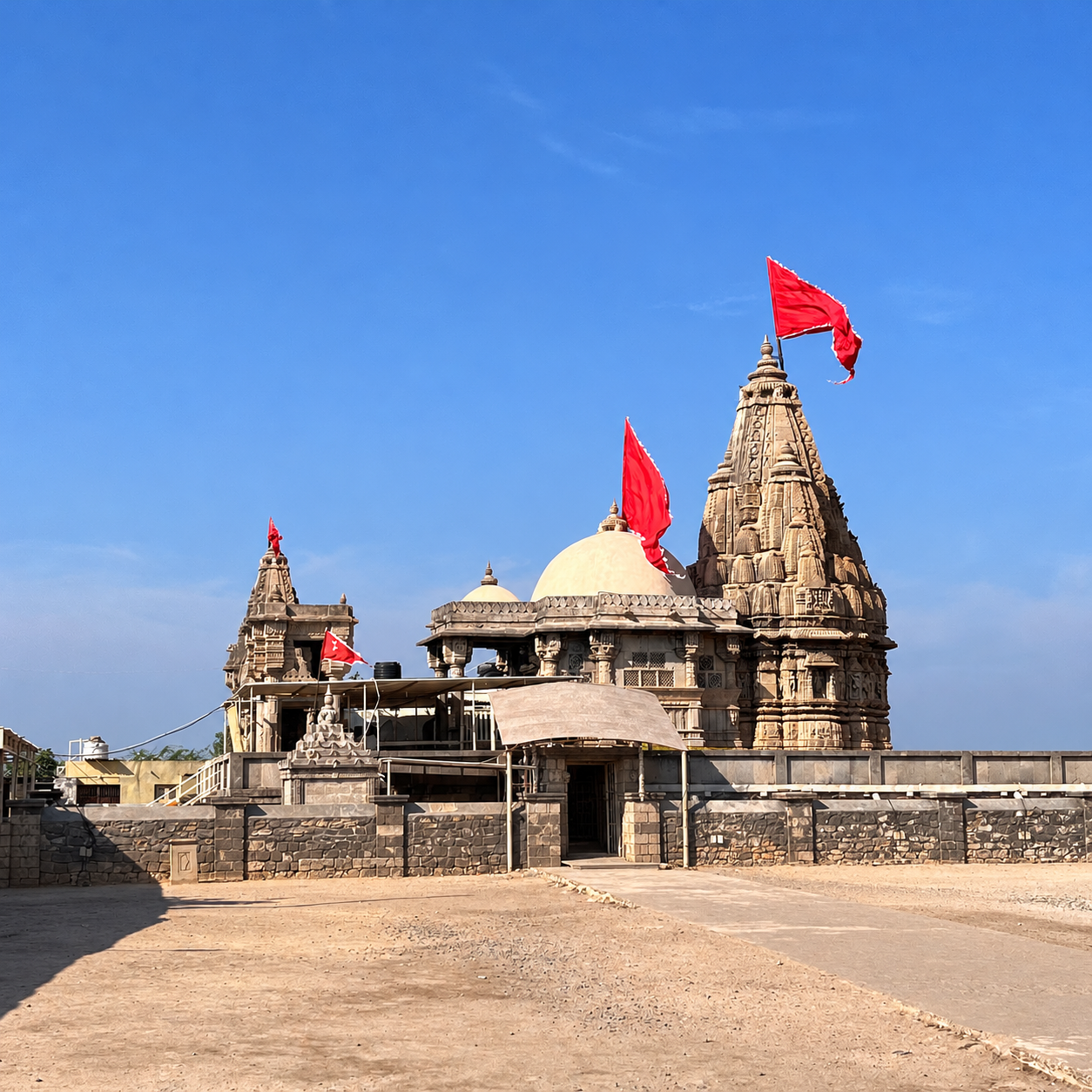
Dwarka outskirts
Rukmini Devi Temple
A distinct sacred place for Dwarka’s queen.
Explore this place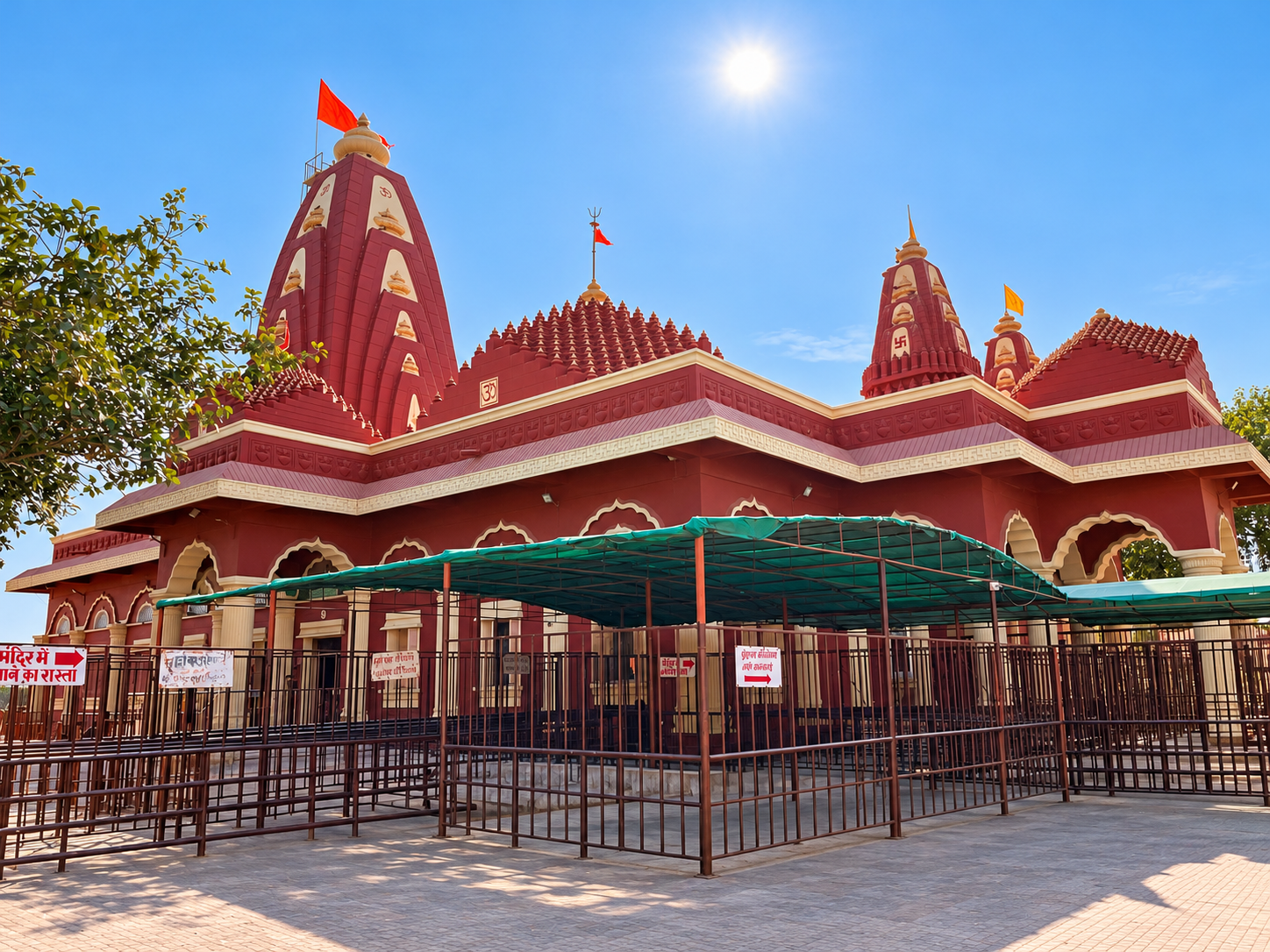
Beyond central Dwarka
Nageshwar Jyotirlinga
Shiva’s presence in the wider Dwarka pilgrimage landscape.
Explore this placeWater & sacred geography
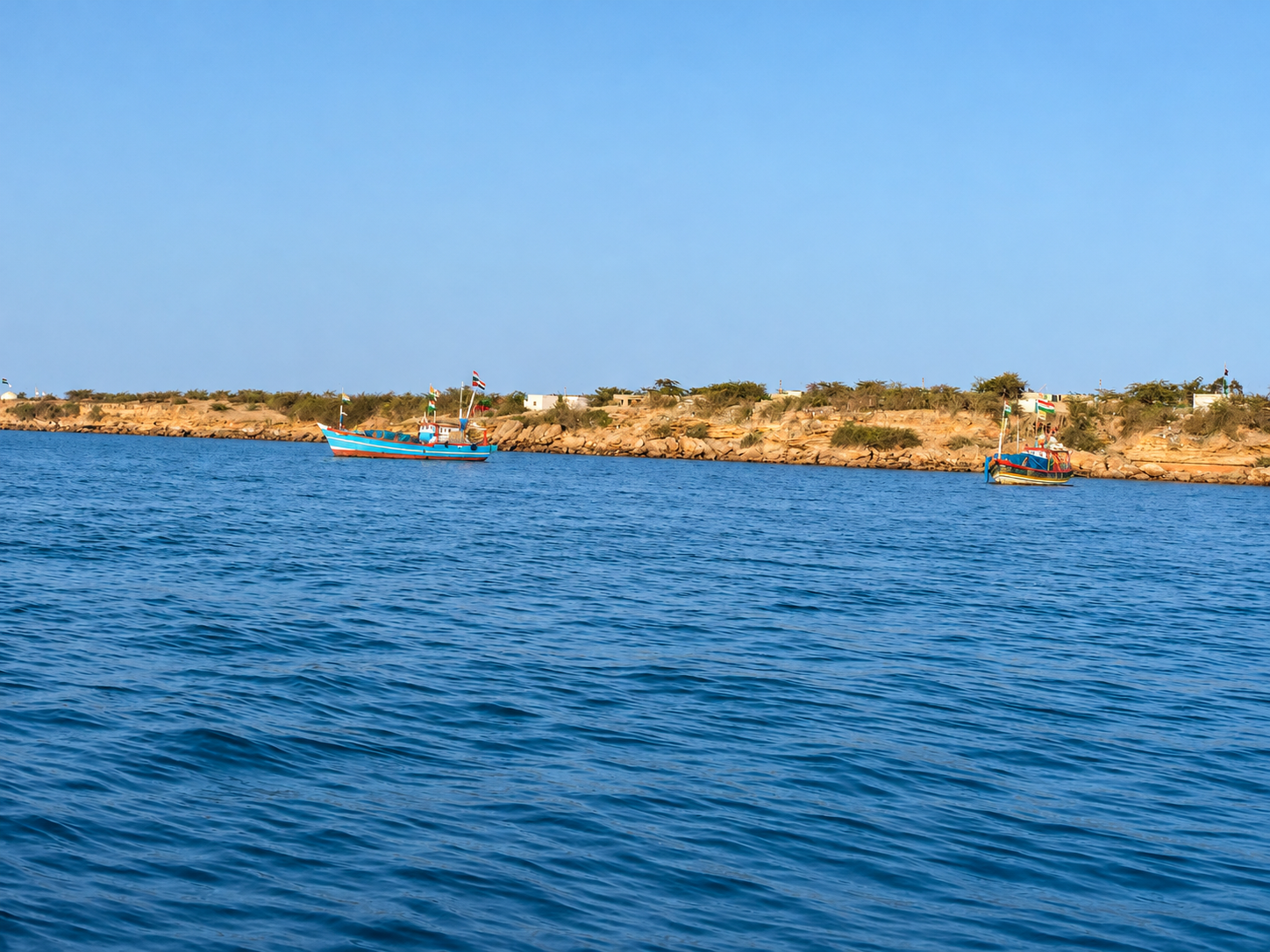
Where the city meets the sea
From the steps of Gomti to the island setting of Bet Dwarka.
Modern crossings
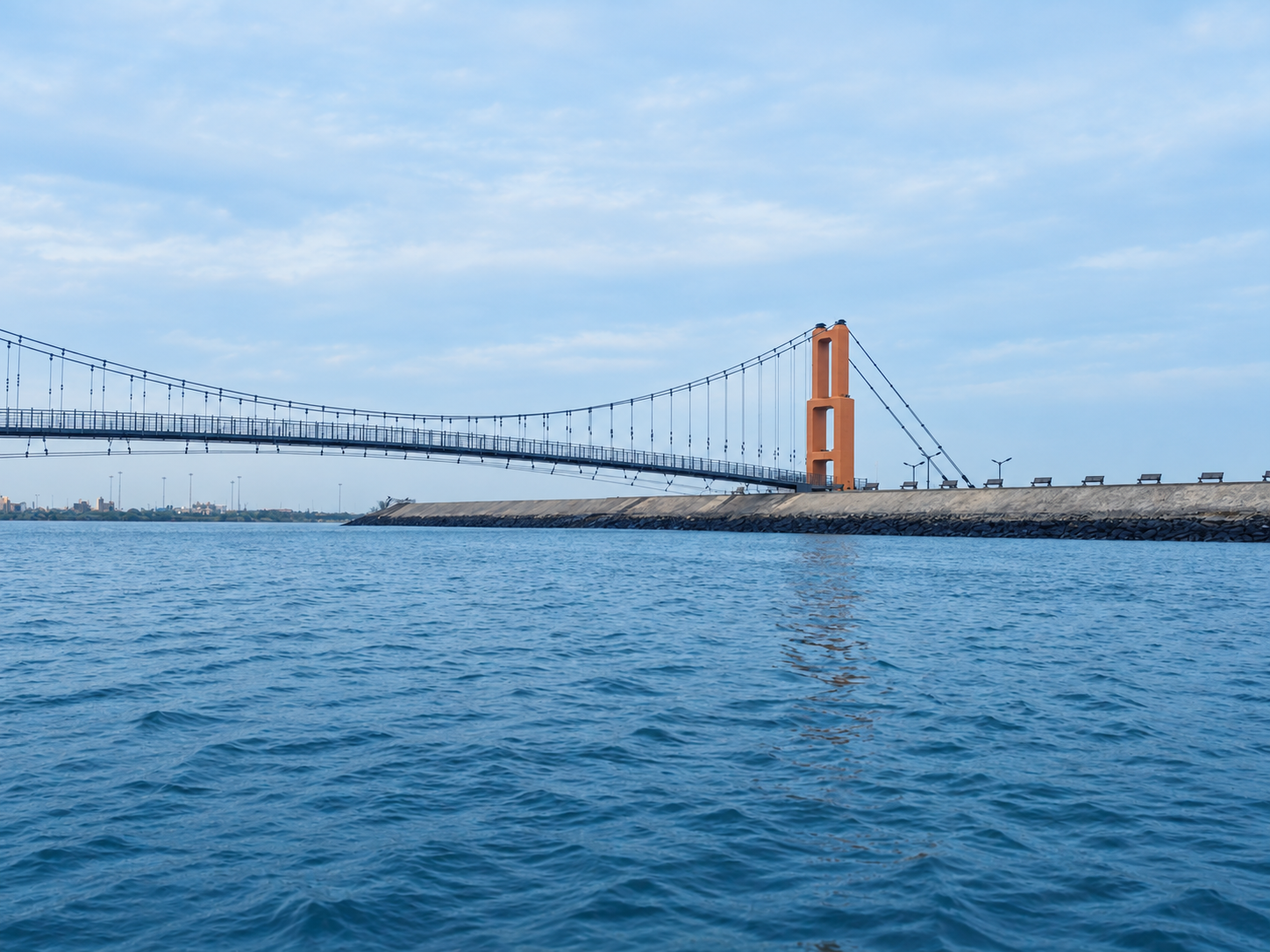
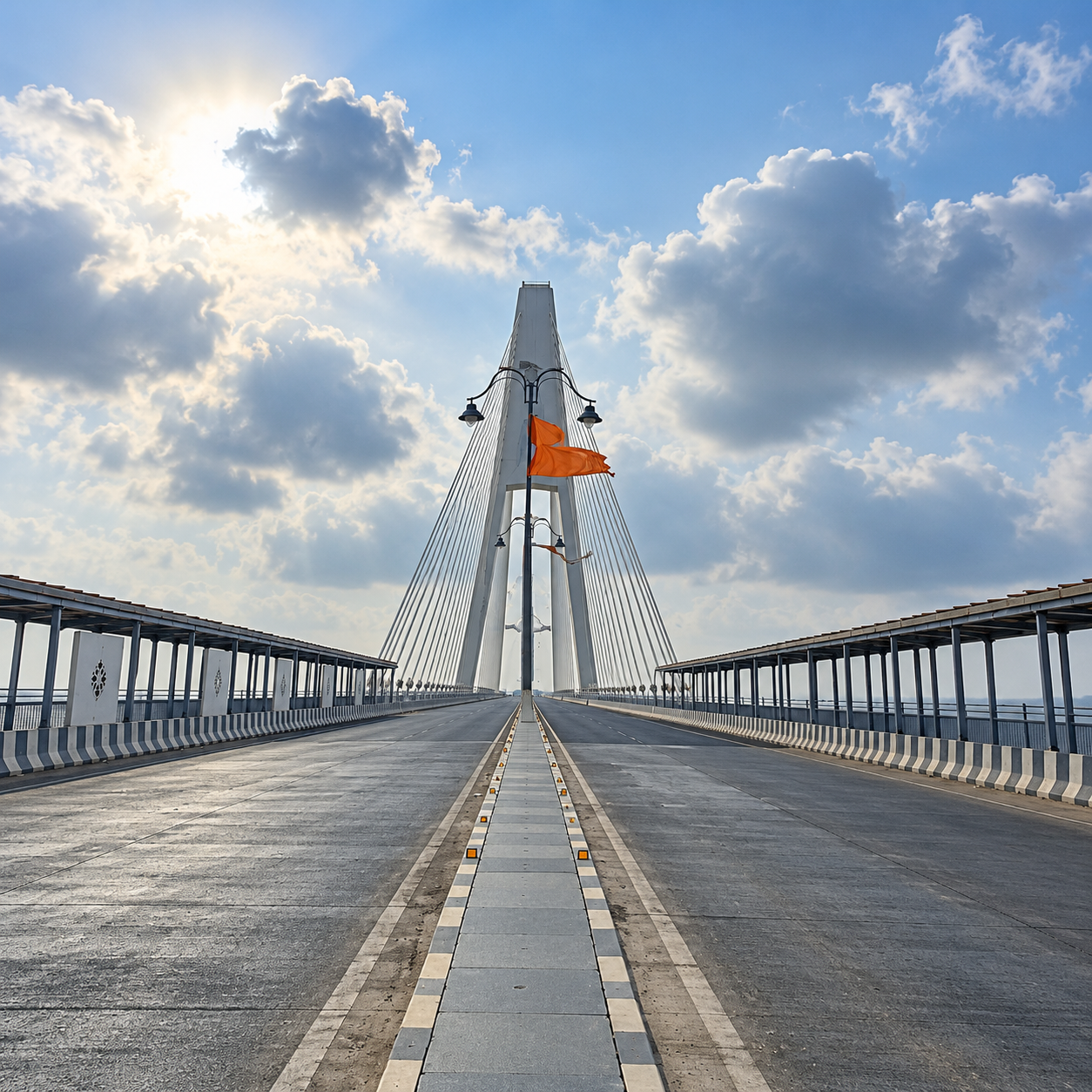
New lines across the water
Two distinct bridges. Contemporary structures within a living landscape.
A coastal pause
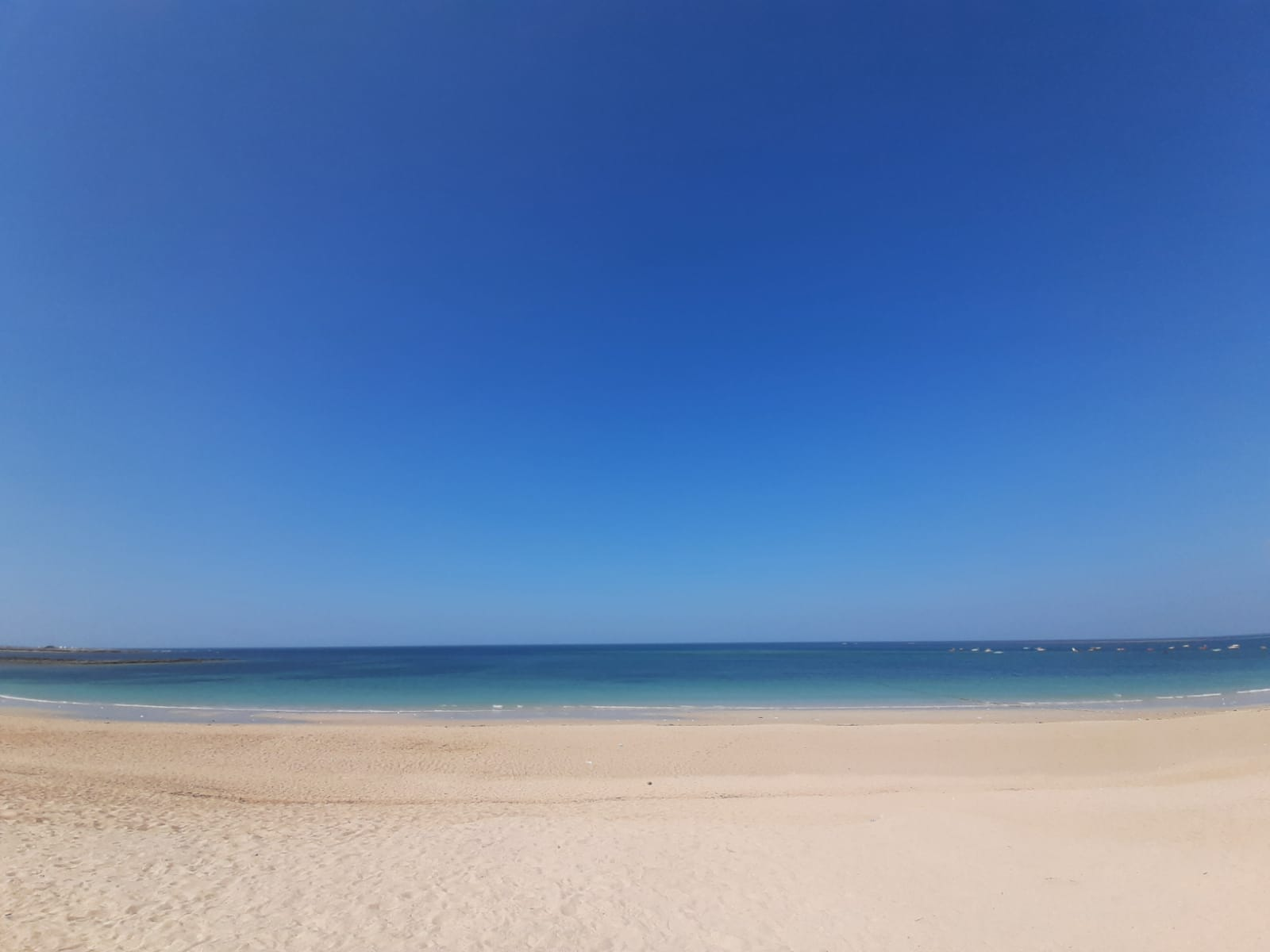
Room for the horizon
A quieter encounter with the coast beyond the temple lanes.
Photographs are credited with their source and licence on each place page. Edited views remove visitors and refine presentation; they do not depict an empty site at all times.
Sacred memory · Artistic interpretation
Imagining
ancient Dwarka.
A coastal city held in sacred memory.
A visual invitation, not a recovered archaeological plan.
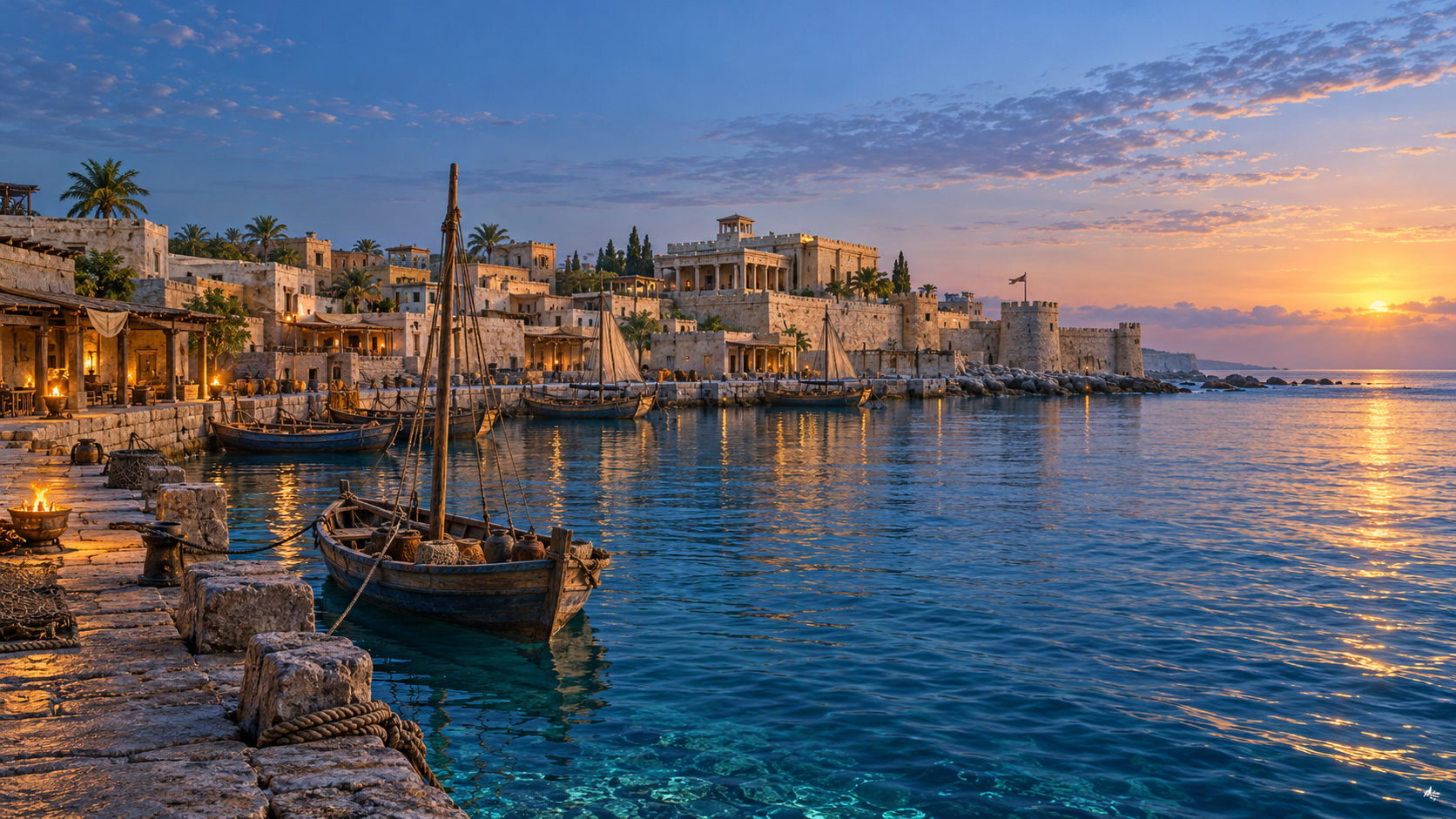
Stone beside water. Boats at a sheltered edge. Courtyards opening toward the sea. This scene imagines a coastal world without turning today’s temple, ghats or bridges into ancient structures.
Archaeology offers a different kind of encounter: anchors, pottery and stone features, each with its own context and questions. Their discovery does not by itself identify a palace or date an episode in Krishna’s life.
Read the island’s material historyFind your own way
A little orientation.
Choose a place that draws you in. Each page brings together the present-day view, its context and the sources behind it.
Our editorial promise
We separate devotional memory from the age of a building, and a research finding from a claim it cannot establish. Government place records, textual tradition and archaeological studies each have a different role.
Every place includes its own sources and practical orientation. The two bridges are treated as modern infrastructure; the beach as a coastal landscape. Their beauty belongs to the landscape we encounter today.