The sacred city
Rukmini Devi Temple
A distinct sacred place for Dwarka’s queen.
The visible place
What you see today
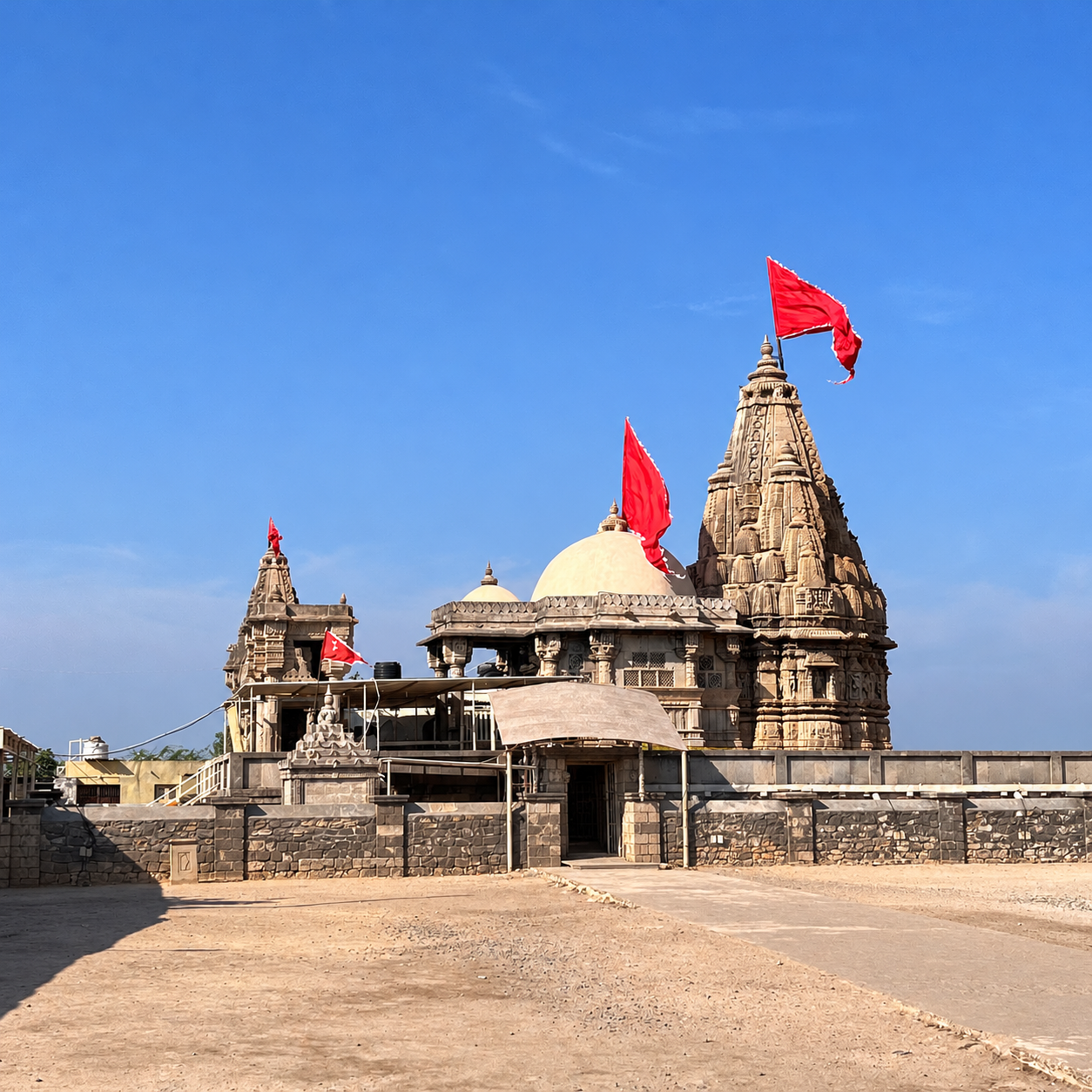
The compact temple rewards slow looking. Carved figures and bands of elephants animate the exterior, while the tower, domed porch and approach form an intimate composition.
The shrine stands beyond the central temple-and-ghat setting. Its scale and stone detail offer a quieter architectural encounter, distinct from the larger skyline of Jagat Mandir.
Living memory
Sacred association
Rukmini is revered as Krishna’s queen. Bhagavata Purana 10.52 tells of her resolve to marry Krishna and the message she sends to him. That narrative supplies a literary context for devotion to her, not a date for the building.
Stories explaining the shrine’s separation from Jagat Mandir belong to local temple tradition. They are kept distinct here from the cited Bhagavata episode and from architectural history.
History, carefully read
What is documented
Gujarat Tourism associates the present temple with medieval architecture and describes its characteristic carved bands. Its broader claims of sacred antiquity are not treated as a measured age for the standing masonry.
There is no claim here that the present building survives from Rukmini’s lifetime. Its importance lies in the living devotion, architecture and stories that meet at the shrine.
Before you go
A little
orientation.
Visit as a short excursion beyond the central temple and ghats. Take time with the exterior carvings and follow the shrine's current worship arrangements.
Read with us
Sources & traditions
Each source is identified by what it can establish.
Place & pilgrimage documentationGujarat Tourism · Rukmini Devi Temple
Describes the shrine and its carved figure and elephant bands. The medieval attribution is kept separate from traditional antiquity.
Read the source (opens in a new tab)Textual traditionBhaktivedanta Book Trust, Vedabase textual edition · Bhagavata Purana 10.52, Rukmini's Message to Krishna
Chapter 10.52 narrates Rukmini’s choice of Krishna and her message. It provides a literary context, not a construction date for this temple.
Read the source (opens in a new tab)Continue along the coast