Along the water
Gomti Ghat
Stone steps, sacred water and the western sea.
The visible place
What you see today
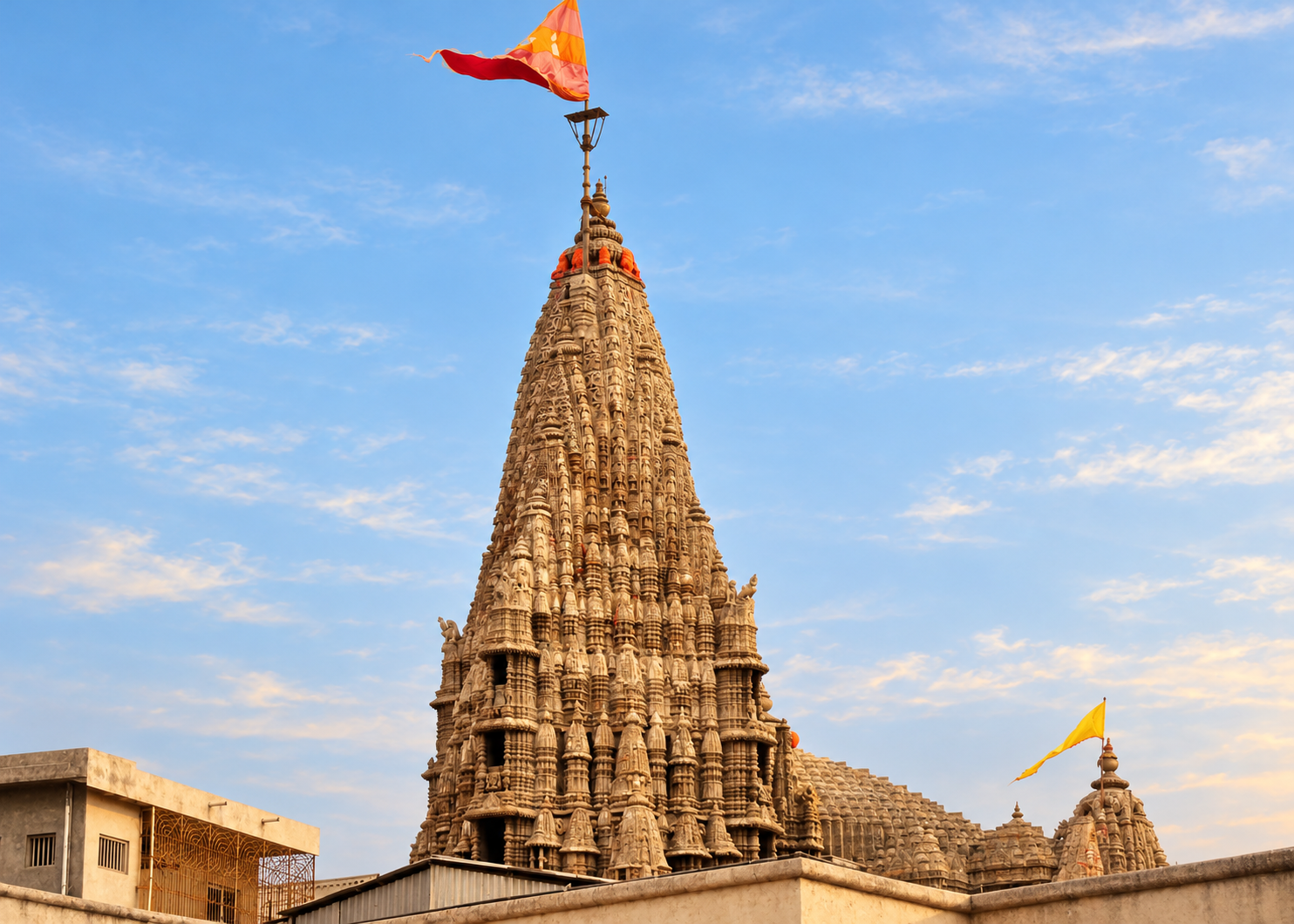
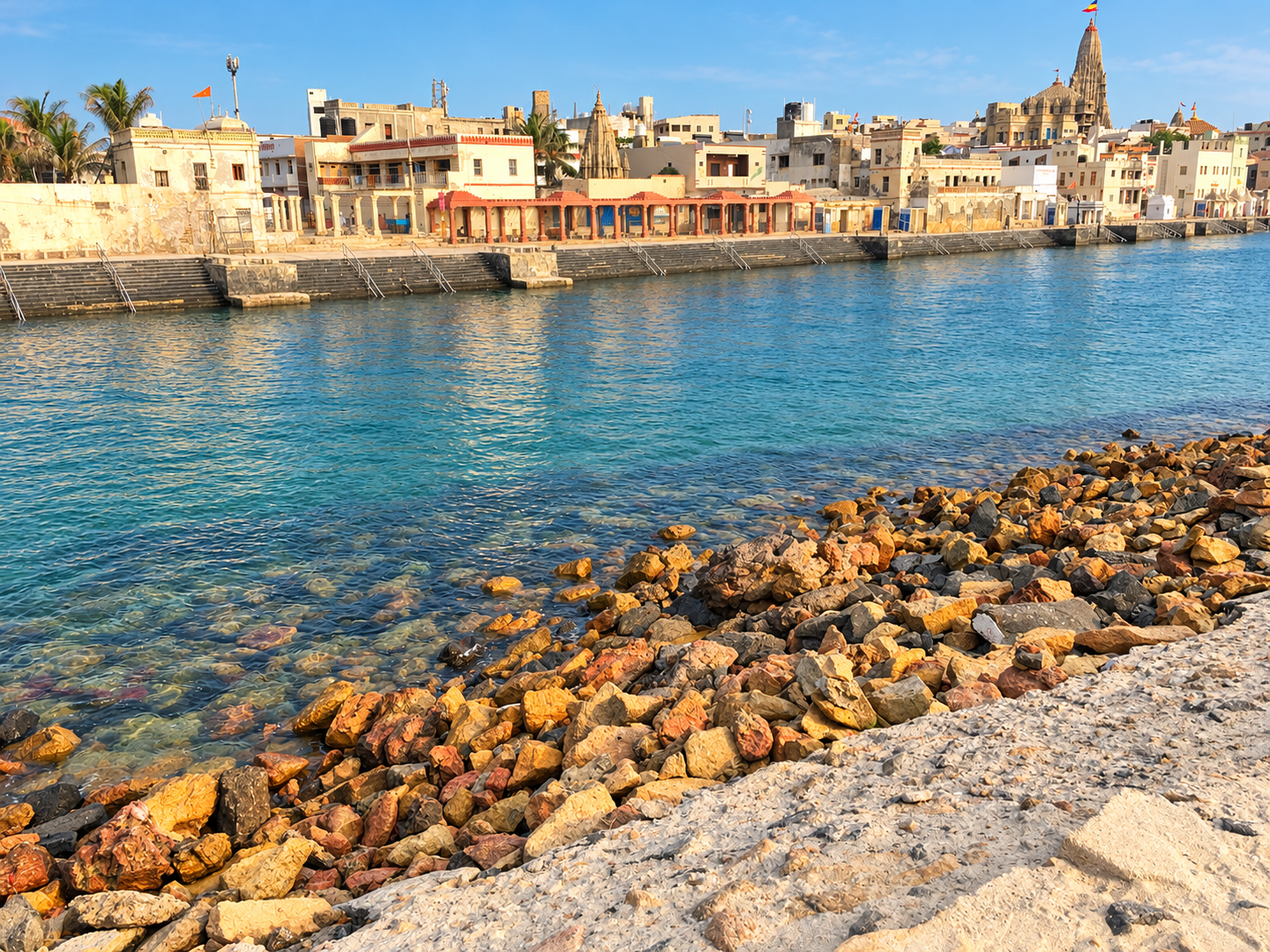
Gomti Ghat follows the creek below Jagat Mandir. Stone steps descend toward tidal water, with smaller shrines and a close-built town behind them. Beyond the mouth of the creek lies the Arabian Sea.
Light and tide continually change the view. The ghat’s architecture makes that meeting tangible: a succession of landings, edges and approaches between the temple town and the water.
Living memory
Sacred association
Bathing and prayer form part of the ghat’s continuing pilgrimage life. Accounts that associate these waters with Ganga express sacred tradition; they should not be read as a claim that the local creek is a geographical tributary of the northern river.
History, carefully read
What is documented
Marine research has examined Dwarka as a historical harbour. Anchors and submerged stone features invite a material history of coastal activity, alongside the ghat’s devotional history.
The 2004 study by Gaur, Sundaresh and Tripati interpreted the structures it investigated as harbour works and emphasised dating difficulties. It does not establish that today’s ghats existed unchanged in Krishna’s era, or that every offshore structure belongs to one ancient city.
Before you go
A little
orientation.
Pair the waterfront with Jagat Mandir. Steps can be wet and the water is tidal; observe local guidance and leave space for worship.
Read with us
Sources & traditions
Each source is identified by what it can establish.
Place & pilgrimage documentationMinistry of Tourism, Government of India · Explore the Gomti Ghat of Dwarka
Documents the ghat, shrines and pilgrimage practices. Sacred associations with other rivers are understood as tradition, not physical geography.
Read the source (opens in a new tab)Place & pilgrimage documentationDistrict Devbhumi Dwarka, Government of Gujarat · Dwarkadhish Temple
Supports the temple’s relationship with Gomti creek and the river-facing approach. The page’s early chronology is not used here.
Read the source (opens in a new tab)Archaeological researchCurrent Science 86(9), 1256–1260 · An ancient harbour at Dwarka: Study based on the recent underwater explorations
Gaur, Sundaresh and Tripati, Current Science (2004). The authors examine anchors and submerged structures, discuss difficult dating, and interpret the investigated structures as harbour works. These results do not identify a palace of Krishna.
Read the source (opens in a new tab)Continue along the coast